
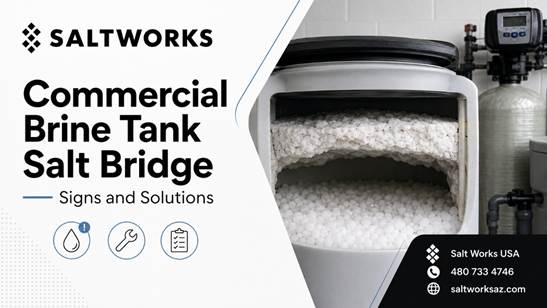
A commercial water softener can appear to have plenty of salt while producing hard water. One possible cause is a salt bridge inside the brine tank. The upper layer hardens into a crust, leaving an empty space between the salt and the water below. Because the water cannot reach enough salt, the system cannot create the strong brine needed for normal regeneration.
Salt bridging deserves prompt attention in Arizona facilities where hotels, restaurants, laundries, health care buildings and industrial operations depend on steady soft water. Recognizing the warning signs can prevent wasted service calls, scale problems and an unexpected shortage.
Why Salt Bridges Form
Humidity is a common cause. Moisture can make salt particles stick together near the top of the tank, especially when the salt sits for a long period. The wrong salt type, repeated overfilling and changes in tank temperature may also contribute.
A system with low or irregular salt use can be vulnerable because the same material remains in place for months. Heavy use creates a different problem. Operators may add new salt before checking what remains underneath, allowing compacted layers to build gradually.
Salt quality matters as well. Some pellet products are formulated to reduce bridging and mushing. The softener manufacturer should guide the final product choice because tank design and operating conditions vary.
Watch for Hard Water Returning
The clearest warning is a return of hard water symptoms even though the brine tank looks full. Glassware may show more spots. Laundry may feel stiff. Scale can begin appearing on fixtures, dish machines, boilers or other equipment.
Compare current performance with normal operation. If salt use appears to have stopped completely, the upper layer may be suspended above an empty space. A facility that tracks salt deliveries and regeneration cycles is more likely to notice the change early.
Do not keep adding salt to a tank that never seems to empty. More material can make the bridge heavier without restoring brine production.
Distinguish Bridging From Salt Mushing
A salt bridge forms above the water. Salt mushing develops lower in the tank when dissolved material recrystallises into a thick sludge. Both conditions interfere with regeneration, but they require different cleanup.
Standing water, poor drainage and heavy material at the bottom may point to mushing or another equipment problem. Excess water can also result from a blocked brine line, valve trouble or injector failure.
A tank inspection should therefore consider the complete system instead of assuming every salt problem is a bridge.
Check the Tank Safely
Small softeners may allow a careful surface check using the manufacturer’s instructions. Commercial facilities should be more cautious, particularly around large brine tanks, electrical equipment and restricted access areas.
Do not climb into a tank, strike it with sharp metal tools or force an object past internal components. Never disturb equipment while a regeneration cycle is running. When access is difficult or the tank contains a large quantity of salt, arrange a professional inspection.
Photographs, recent salt usage records and a description of water quality changes can help the service provider understand the problem before arriving.
Reduce the Chance of Another Bridge
Keep the brine tank at an appropriate level rather than filling it automatically to the top. Cargill advises keeping water softener salt at least half full without overfilling. Follow the equipment manual when its recommendation differs.
Use a salt grade suited to the system and facility demand. Store replacement bags in a dry area so moisture does not begin affecting the product before it reaches the tank.
Review salt consumption regularly. A scheduled delivery and inspection program can identify unusual usage, damaged equipment or a tank that is not drawing brine correctly.
Schedule Commercial Salt Service With Salt Works USA
Salt Works USA supplies bulk and bagged water softener salt and provides scheduled brine tank filling and inspection services throughout the Phoenix Valley and Arizona. The team can help commercial facilities review salt use, product choice and delivery needs before hard water disrupts operations. Call 480 733 4746 for a free service quote or to arrange commercial salt delivery.
References
Salt Works USA: Full Service Brine Tank Filling
Salt Works USA: Commercial Salt Services
Culligan: Water Softener Troubleshooting